
Genetic study busts a decades-old myth about the U.S. bed bug comeback
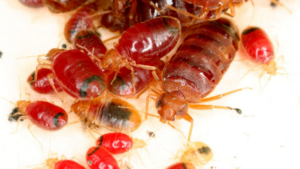
The bed bugs that surged across the United States in the 1990s weren’t brought back by international travelers. Recent genomics testing shows they were here all along.
Articles from VT News that highlight invasive species education, research, & engagement

The bed bugs that surged across the United States in the 1990s weren’t brought back by international travelers. Recent genomics testing shows they were here all along.

From food safety and aquaculture to market development and workforce training, the Virginia Seafood Agricultural Research and Extension Center applies research to the challenges facing a $1.27 billion industry.

This spring, undergraduates will take their classroom learning from Blacksburg to Chile’s coast, rainforests, and mountains, joining disease ecologist Luis Escobar in the field to investigate how and where infectious diseases emerge.

Dr. Man Li has joined Virginia Tech’s Department of Agricultural and Applied Economics as an Associate Professor through the Invasive Species Collaborative’s cluster hire. The ISC is excited to see the innovative work Dr. Li will bring to the intersection of invasive species and economics!

Researchers developed a method to track and predict pollen movement through the environment, with potential applications for understanding pollen dispersal in invasive plants.

Conservation programs can transform private lands, but many landowners ease off once agreements end. This article explores “stewardship drop,” uncovering surprising insights on timing, motivation, and strategies to sustain land management long after contracts conclude.

How can scientists build trust with the public? A new study from Virginia Tech suggests that credibility isn’t just about expertise – it’s also about whether people believe scientists are motivated by the public good.

ISC Affiliate Dr. David Schmale will lead a collaborative effort to improve the prediction, detection, and response to atmospheric incursions of invasive crop threats by leveraging advances in aerobiology, geospatial sensing, genomics, and predictive modeling.

Researchers are studying how beech bark disease has affected an endangered salamander in southwestern Virginia. Combined with other invasive pathogens and natural disturbances, the disease has contributed to dramatic changes in the forests that support these salamander populations.

Ordinary pet dogs outperformed trained human searchers in the first real-world test of community dog-handler teams, finding more than twice as many egg masses.

The Ecological Society of America awarded its 2026 Commitment to Human Diversity in Ecology Award to Dr. Haldre Rogers, an ISC Affiliate and associate professor in Virginia Tech’s College of Natural Resources and Environment.

Undergraduate researchers at Virginia Tech study seed-dispersal networks of common fleshy-fruiting native and invasive plants in Appalachia.